June 17, 2026
Short-term rental for businesses with employees across Europe




In a labor market where projects, assignments, and employee mobility cross national borders, short-term rental has become an increasingly important solution for companies with employees across Europe. When teams need to be relocated quickly, specialists are brought into time-limited assignments, or new markets are being tested without long commitments, businesses need accommodation that combines flexibility, cost control, and a high standard of comfort. For many organizations, this is no longer just a practical matter, but part of their overall mobility strategy and B2B rental solutions.
For HR, procurement, mobility management, and project leadership, the issue is not simply finding a place where employees can stay overnight. It is about creating the right conditions for productivity, well-being, and a smooth working routine for staff who need to live away from home for days, weeks, or months. That is why more companies are choosing corporate housing and flexible business accommodation as a more considered alternative to traditional hotel stays.
European businesses operate in a market defined by rapid change, high pace, and a growing need for specialized expertise. Expansion into new cities, project deliveries with tight deadlines, seasonal peaks, and international assignments often require employees to travel or relocate temporarily. Hotels may be sufficient for short business trips, but they are often less suitable when stays last longer or when several employees need accommodation at the same time.
Short-term rental provides access to fully furnished apartments and homes with more space, better privacy, and a more residential setting than a standard hotel room. This is especially relevant in Europe, where employees often work in major cities with high living costs and varying access to suitable accommodation. With a more flexible solution, businesses can more easily balance the need for comfort, location, and budget.
At the same time, employee expectations have changed. Staff who travel frequently for work increasingly expect accommodation that allows them to maintain a normal daily routine. Access to a kitchen, washing machine, workspace, and a central location has a significant impact on both well-being and efficiency. For this reason, corporate housing has become a natural part of modern companies’ approach to mobility and employer branding.

For businesses, short-term rental works as a middle ground between hotels and traditional long-term leases. The concept is designed for employees who need furnished accommodation for a limited period, often from a few days to several months. The properties are usually move-in ready, with electricity, internet, kitchen equipment, and essential amenities included.
In practice, the process begins when the business maps out its needs: how many people are traveling, how long the stay will last, which city or region they will work in, and what requirements apply to standard, size, and location. A suitable solution is then selected based on the scope of the assignment, whether it involves individual employees, smaller project teams, or larger groups. For many companies, it is a clear advantage to manage multiple destinations through one provider and one administrative setup.
Flexibility is one of the greatest strengths of this model. If a project is extended, the stay can often be prolonged without the employee having to move. If the assignment ends earlier than planned, there are often options that offer more adaptability than a traditional residential lease. This makes short-term rental particularly attractive in sectors such as construction, energy, IT, engineering, consulting, and film production.
For businesses with employees in several European countries, the model also offers administrative benefits. A professional partner can simplify booking, invoicing, reporting, and support, giving internal teams better oversight and reducing manual work. This makes it easier to manage costs, internal policies, and the employee experience across markets.
Hotels are often the first choice for short business trips, but for longer stays, short-term rental is usually more cost-effective and practical. With larger living areas and separate zones for sleeping, working, and preparing meals, employees get a daily routine that feels more like home. That can make a significant difference to both mental balance and long-term performance.
Short-term rental also often provides better overall value than hotels when a stay lasts more than a few nights. The company does not necessarily pay for services such as daily room service if they are not essential, while the employee benefits from a more functional and comfortable place to live. This is an important reason why more companies are considering corporate housing as a smarter alternative in European cities.
When employees move between different European countries, questions often arise around compliance, safety, and duty of care. A professional short-term rental provider can contribute with quality-assured properties, clear contract terms, and documented routines. For the business, this means greater control and lower risk, especially when employees are staying in a market they do not know well.
Local knowledge is equally important. Rules for stays, registration, short-term letting, and corporate leasing vary from country to country and from city to city. That is why businesses should work with partners who understand local conditions and can advise on everything from neighborhood selection to property type and practical arrangements.

Corporate housing Europe is especially well suited when employees need accommodation in connection with time-limited projects. This may include the implementation of new systems, office launches, construction projects, maintenance work, or international assignments that require physical presence over time. In these situations, it is important to offer a housing solution that makes it possible to work efficiently while also living comfortably.
Project work often involves uncertainty regarding timeline, staffing, and location. Sometimes it is unclear whether an assignment will last six weeks or six months. Corporate housing is well suited to these situations because it is more stable than continuously extending hotel stays, while remaining more flexible than traditional lease agreements.
This also applies to companies that send travelling work crews to different locations across Europe. When employees stay in the same area or in properties with a similar standard, logistics become easier and daily life becomes more predictable. Short commuting time to the project site and good living conditions can directly contribute to better delivery and lower strain on the team.
Corporate housing is not only useful in traditional project work. It is also a highly practical solution for temporary relocation, onboarding of international employees, and transition periods between arrival and a permanent living arrangement. A new hire moving to a new city often needs time to understand the housing market before securing a long-term home.
In major European cities, where the housing market can be difficult and highly competitive, short-term rental provides a safe and effective interim solution. At the same time, it signals professionalism and care on the part of the employer by reducing stress during a sensitive phase. This can positively affect both the start in a new role and the long-term employee experience.
Many businesses rely on specialists who travel between projects in different European countries. This includes engineers, technicians, consultants, and leaders responsible for multiple markets. For these employees, flexible accommodation is essential because stays often vary in both length and location.
Rotating staffing is another area where short-term rental works particularly well. When properties are fully equipped and ready to use, less time is spent on practical matters and more time can be devoted to the assignment itself. This creates a more efficient start and a more predictable working routine from day one.

Before choosing short-term rental or corporate housing in Europe, a business should make a comprehensive assessment of both practical and strategic needs. It is easy to focus too narrowly on price, but the best solution is the one that supports project goals, employee satisfaction, and sound risk management. A well-considered decision can reduce both unnecessary costs and operational challenges.
Location is often the most important factor. The property should be close to the workplace or offer easy access to public transport, the airport, and essential services. In major European cities, travel time can significantly affect both well-being and productivity, especially during stays lasting several weeks.
It is also important to assess the surrounding area. Employees should stay in safe and functional neighborhoods with access to grocery stores, fitness facilities, and places where they can easily eat or take a break. These details often have a greater impact on the overall experience than many assume during the planning stage.
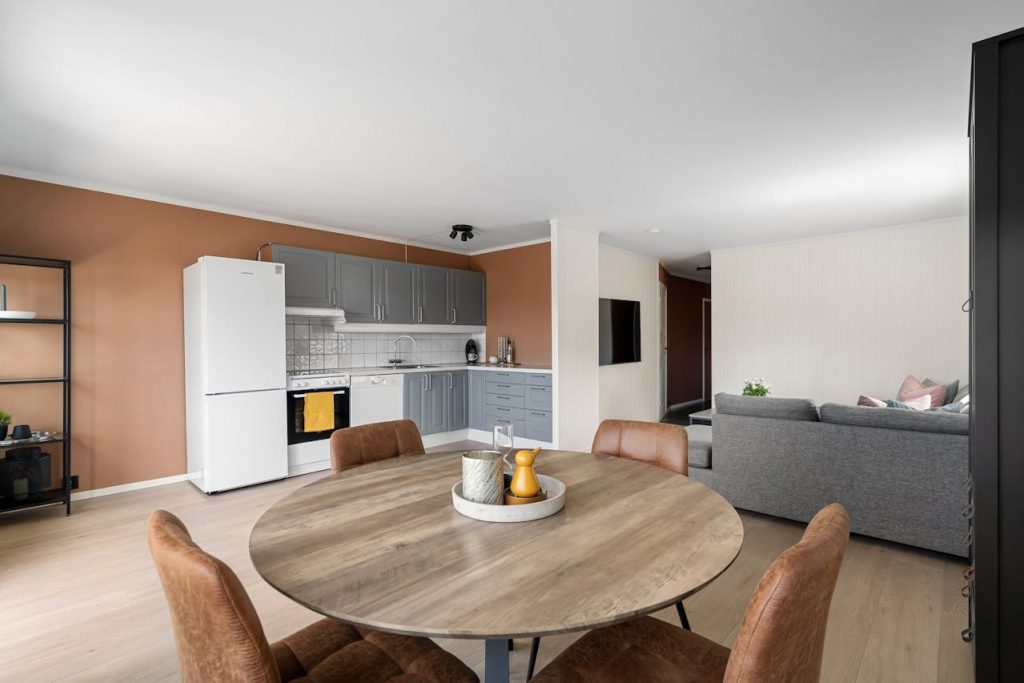
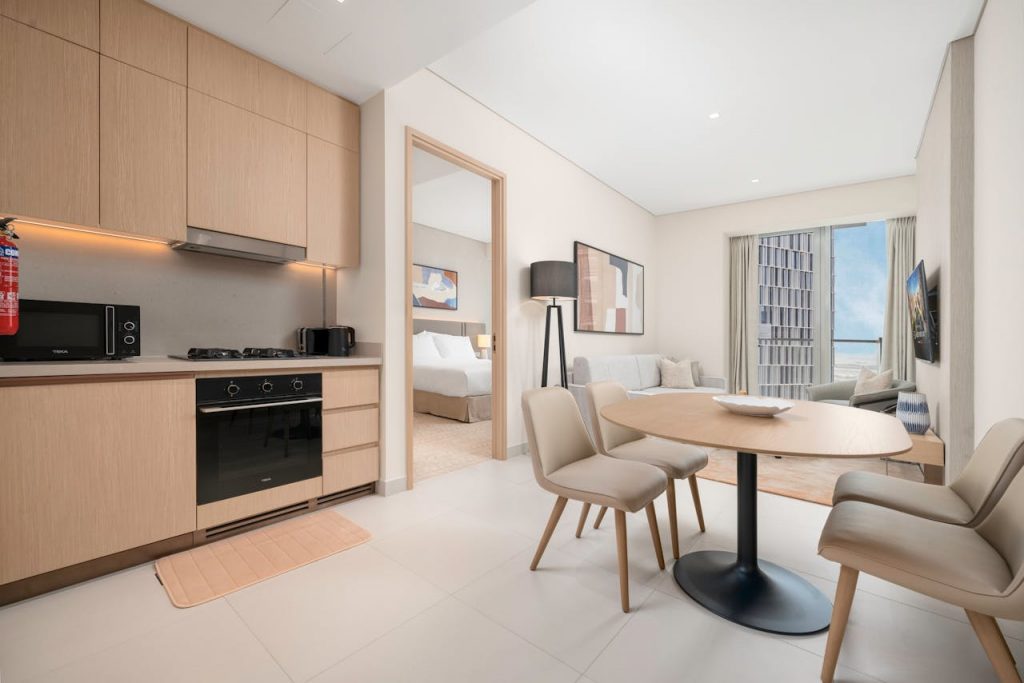
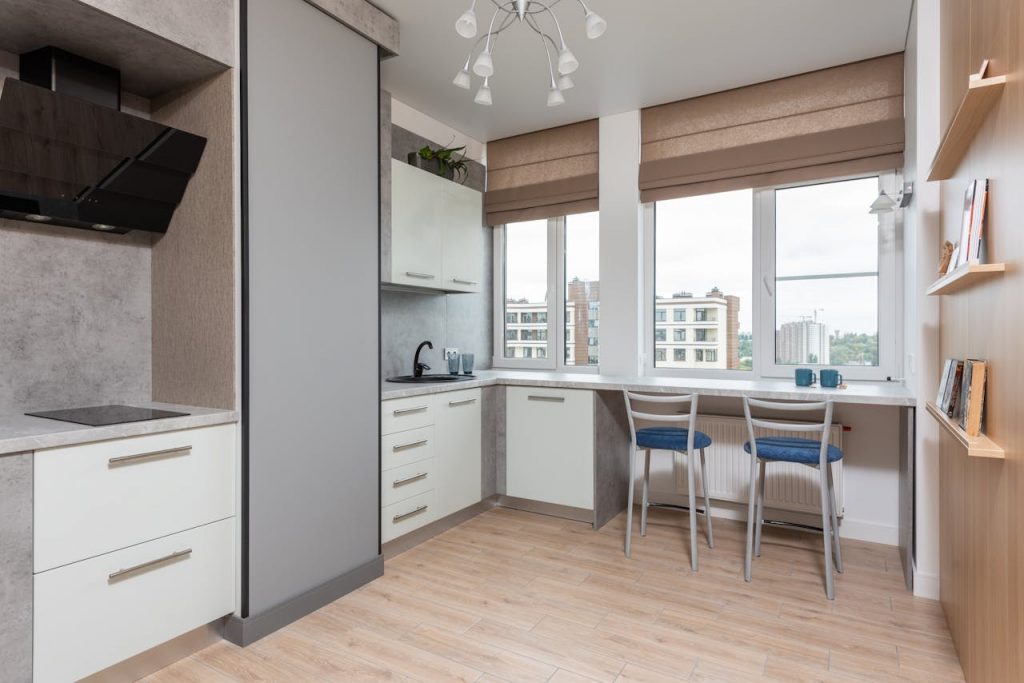
With flexible business accommodation, the property must suit the employee’s actual needs. For some, a simple studio apartment is sufficient, while others need a separate bedroom, a workspace, or room for family members. Reliable internet, a kitchen, laundry facilities, and a good bed should be seen as basic requirements for most stays.
Comfort is not only about well-being, but also about performance. An employee who lives well, sleeps better, and enjoys a more balanced daily routine will often perform better over time. That is why accommodation should be viewed as an investment in delivery capability, not just as a practical expense.
When projects change, accommodation needs to adapt. Businesses should therefore look closely at the flexible rental contracts available and how they handle extensions, early termination, and changes in the number of occupants. This is particularly important in international projects, where timelines are often affected by deliveries, client needs, or regulatory processes.
A good provider understands this uncertainty and offers solutions that give the business room to act without compromising quality. This reduces the risk of being tied to arrangements that are either unsuitable or unnecessarily expensive.
Price should always be evaluated against total value. A low nightly rate is not necessarily beneficial if the property is poorly located, lacks important amenities, or leads to additional transport costs. Businesses should therefore assess the full picture: quality, location, included services, support, and how the solution affects the employee’s daily working life.
In many cases, corporate housing will be more cost-effective than both hotels and traditional rentals when all factors are included. Especially for stays of a certain duration, this model offers a better balance between economy, flexibility, and living comfort.
A professional setup requires more than access to properties. Businesses should choose a partner that offers clear customer support, fast response if issues arise, and experience working with corporate clients in Europe. When employees are living in a new city, it is important to know that help is available if something happens.
Security should also be a natural part of the assessment. This includes the standard of the building, access systems, and the provider’s routines for quality assurance and follow-up. An experienced partner will understand the requirements that apply to corporate housing and be able to deliver solutions that meet professional expectations.
When flexible accommodation works well, it creates value on several levels. For the business, it means easier planning, better budget control, and more agile work processes across countries and projects. For the employee, it means a safe and comfortable base that makes it easier to focus on work, establish good routines, and maintain motivation throughout the stay.
In a European labor market, where mobility often involves cultural, linguistic, and practical transitions, this becomes particularly important. Good accommodation does not solve every challenge, but it can make the transition significantly easier and contribute to a more positive overall experience. That is why short-term rental is far more than an alternative to hotels; it is an important part of how modern businesses support employees on the move.
For companies that regularly send employees to different cities across Europe, it can be strategic to establish a clear model for corporate housing. With clear criteria, reliable providers, and standardized processes, it becomes easier to scale mobility without compromising quality, safety, or efficiency. This creates both operational advantages and a stronger foundation for attracting and retaining talent in an increasingly international working environment.